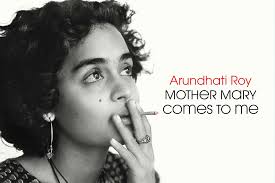
This book really struck a cord with me. As I’m writing this it is one of three books I’ve physically completed part of the anti-brain rot challenge. Actually, including my audiobooks too. I’ve started a bunch of books, but I’m either in the middle of or lost interest in them. To be honest, I don’t think there’s anything wrong with not liking a book and not finishing it. I do think it’s a problem if you don’t want to read or listen to something simply because you don’t agree. The best part of reading and most parts of life is to learn about things you wouldn’t come across on the regular. And to also hopefully find yourself, feel seen and understood. This memoir by Arundhati Roy brought insight into my own self that I didn’t expect at all going in.
I was unfamiliar with Arundhati Roy before picking up this book. I had seen it on the best-sellers list and saw some reviews on the TikTok about it being one of the best memoirs of last year. By her name, I knew it was an Indian author, and I am in my era of supporting POC authors. Especially South Indian authors, because I want to feel more connected to my roots because I often feel so out of touch with it. Her first name threw me off to believe the author was North Indian. Even with the Roy name, which is a common South Indian, Kerala name. And she later reveals her given first name is Suzanna, a much more Syro-Christian Kerala style name. Very early on in the book she confirms her mom was from Kerala and as young kids, Arundhati, her brother and mom move back to Kerala. From there I was so hooked.
I think because I know so little about how my parents grew up, and she had to have grown up in the state of Kerala the same time they did. Roy’s upbringing was rather unconventional. So, it would have been like my parents and her were living totally different lives, but at the same time, in the same place. Which is surprising and thrilling.
Even today, divorce is so taboo within our culture and community. It happens more often now, but is still frowned upon. For her to have not just divorced parents, but her mom married outside of the Kerala Syro-Christian community she grew up in and was an outspoken strong independent woman, the odds were not in her favor. At least not in Kerala. The main through line in this memoir is the tumultuous relationship with her mother. And yet an understanding that it was because her mom was in some ways fearless to do what was best for herself, she paved the way for Arundhati herself to find her own path.
The relationship between Roy and her mother, Mary is so interesting. Her mother seemed to be a very demanding and strict person. And clearly brilliant and cared deeply about education, as she is famous in her own right for creating a school in Kerala. She reminded me of my grandmother, who was a teacher. From her old pictures, my grandmother looked rather stern too. By the time she got to us, the grandkids, she’d softened up quite a bit. My mom on the other hand isn’t stern, but the complicated mother/daughter relationship is very relatable. Specifically, the concept of it being such a toxic environment, but one you cannot fully break away from. One of my best friends and I talk about it often. We know our moms won’t change, and for us it does seem to be rooted in culture, but the idea of boundaries or cutting them off also seems so far off the table. There is a respect for them, no matter how difficult they may make it.
In what I can only imagine was scary, challenging and ultimately freeing, Arundhati managed to separate herself. Running away at a young age after an incident with her mom. There were years of struggle, and years without contact with her mom. It wasn’t the fact that she just ran away and found some success. It was also that even when she found moments of success where she could have lived a stable life, she followed her intuition. She had no idea how these things would turn out, but she went after it fearlessly. Despite all the contention with her mom, I think it’s because she had an example of someone who didn’t follow the rule book that gave her some of the courage to figure it out for herself.
Part of the anti-brain rot challenge is to take notes and annotate. I really wish I did, because I’d probably have a much more cohesive review of this book. There is a part of me that is just proud to hear from badass South Indian women. And I think she captures both her mother and herself that way in this book. Even badass woman who are moving things forward has flaws. That doesn’t mean we should ignore things or allow people to treat others poorly, it just means people are not just one thing, they are complex.
I am a bit surprised at how much this book resonated with me. I felt so seen in a way. Honestly, I am probably just so out of touch, in that I don’t know many authors with ties to Kerala. I’m sure there are plenty. I recall an author who got some hype a few years ago, Abraham Verghese, but I haven’t read his books. There was a great kid’s book called A Bridge Home, that I loved by a South Indian author, Padma Venkatraman. Not from Kerala, but a great book. All to say, I hope to expand my reading list with South Indian authors, bonus points if they are from my family’s state!
What’s the best book you’ve read lately?
Rating: ⭐️ ⭐️ ⭐️ ⭐️ ⭐️


 Tis Me Michelle
Leave a comment